North America's largest single-source of Certified Humane 365 grass-fed pasture-raised dairy
Start with better milk.
2,000 acres. Hundreds of happy cows. Outdoors 365 days a year. Every certification that matters. This is Hart Dairy.
Work with usThis is not a stock video. These are our happy cows roaming freely and eating fresh grass 365 days a year, at our farms in Georgia.
147%
more omega-3
than conventional milk
0.95
omega-6 to omega-3 ratio
vs 5.77 in conventional (6× better)
365
days on pasture
never confined. Not one day.
2×
cow lifespan
vs the US dairy industry average
The milk
Not all milk is the same. The science is clear.
What a cow eats changes what you drink. When cows graze on fresh pasture year-round, the composition of their milk shifts — more of what humans need, less of what we don't. This isn't marketing. It's published, peer-reviewed science.
More omega-3 fatty acids.
Grass-fed milk contains 2.5 times more omega-3 fatty acids than conventional milk. Omega-3s are essential for brain function, cardiovascular health, and reducing systemic inflammation. Your body can't produce them — they have to come from what you eat.
Benbrook CM et al. (2018). Food Science & Nutrition, 6(3):681-700. 1,163 milk samples across the US over 3 years.
A near-perfect fatty acid ratio.
The omega-6 to omega-3 ratio in grass-fed milk is 0.95 — nearly the ideal 1:1. Conventional milk sits at 5.77. The modern Western diet averages 15:1. Research links excessive omega-6 relative to omega-3 to cardiovascular disease, cancer, and chronic inflammatory conditions. This single number tells you more about milk quality than any label.
Simopoulos AP (2008). Experimental Biology and Medicine, 233(6):674-688. Benbrook et al. (2018).
More conjugated linoleic acid.
CLA is a naturally occurring fatty acid produced in the rumen of grazing animals. Grass-fed milk contains 2.3 times more CLA than conventional. Research associates higher CLA intake with anti-inflammatory effects, improved body composition, and better cardiovascular markers. The specific CLA isomer dominant in grass-fed milk — cis-9, trans-11 — is the one most studied for health benefits.
Benbrook et al. (2018). Den Hartigh LJ (2019). Nutrients, 11(2):370.
Studies confirm higher vitamin and mineral content.
A meta-analysis of 170 published studies found that pasture-raised milk contains significantly higher concentrations of beta-carotene (a precursor to vitamin A), alpha-tocopherol (vitamin E), and iron. The yellow tint of grass-fed milk fat? That's beta-carotene — a powerful antioxidant you can literally see.
Średnicka-Tober D et al. (2016). British Journal of Nutrition, 115(6):1043-1060. Meta-analysis of 170 studies.
Explore the data
See it for yourself.
Three data views built on published science. No claims — just numbers.
One Glass Benchmark
Pick a food. We'll show you how much you'd need to match the omega-3 in one glass of Hart Dairy milk.
Hart Dairy
1 glass
0.120g omega-3
To match it
Hart Dairy milk: Benbrook et al. 2018 (grassmilk avg). Comparison foods: USDA FoodData Central.
The Swap
Same glass of milk. Very different nutrition. Here's what changes when you swap.
Per glass (244ml). Sources: USDA FoodData Central · Benbrook et al. 2018
Conventional milk
1 glass (244ml)
Higher = more inflammation-promoting
Hart Dairy 365 grass-fed
1 glass (244ml)
Near-perfect 1:1 — closer to what humans evolved on
Same amount. Same calories. Completely different nutrition.
The Pasture Effect
Drag the slider. Watch what happens to milk as cows spend more time outside.
0
days per year on pasture
0 days
Conventional
365 days
Hart Dairy.
Every single day.
🏷️ There is no federal minimum to label dairy milk "grass-fed."
The USDA withdrew its grass-fed standard in 2016. Any dairy can use the term with zero verification. The only claim that actually means something to a consumer is 365 grass-fed — cows on pasture every single day of the year, verified by independent third-party certification.
Data: Benbrook et al. 2018 (1,163 samples). USDA organic pasture rule: 7 CFR 205.239. Grass-fed label: AMS standard withdrawn Jan 2016.
The animals
When you treat cows better, everything gets better.
The average US dairy cow lasts 2.7 lactations before she's culled. Ours average 5 to 6. Some are still producing at 10 years old. That's not an accident — it's what happens when cows live the way they're supposed to.
5–6
average lactations per cow
US industry average: 2.7
<15%
annual cull rate
US industry average: 30–40%
90%
conception rate
Healthier cows reproduce better
Pasture access changes outcomes.
Peer-reviewed research comparing pasture-based and confinement systems shows that cows on pasture have lower rates of mastitis, lameness, claw lesions, and early embryonic mortality. They exhibit more natural behaviors, less aggression, and better resting patterns. Grazing isn't a luxury — it's a biological need.
Mee JF et al. (2020). New Zealand Veterinary Journal, 68(3):168-177.
The first. The most certified.
Hart Dairy was the first pasteurized US dairy cow operation to earn the Certified Humane® designation. We hold Animal Welfare Approved certification from A Greener World — the only animal welfare label Consumer Reports rates as "highly meaningful." These aren't badges we applied for to look good. They're proof that what we do stands up to independent scrutiny.
HFAC / A Greener World / Consumer Reports
The land
2,000 acres of proof that scale and principles aren't enemies.
We didn't inherit pristine farmland. We started on depleted corn and soybean fields and rebuilt the soil from scratch. Today, our three-farm system in South Georgia operates a year-round forage rotation engineered to keep cows grazing fresh grass every day — in a climate where most people said it couldn't be done.
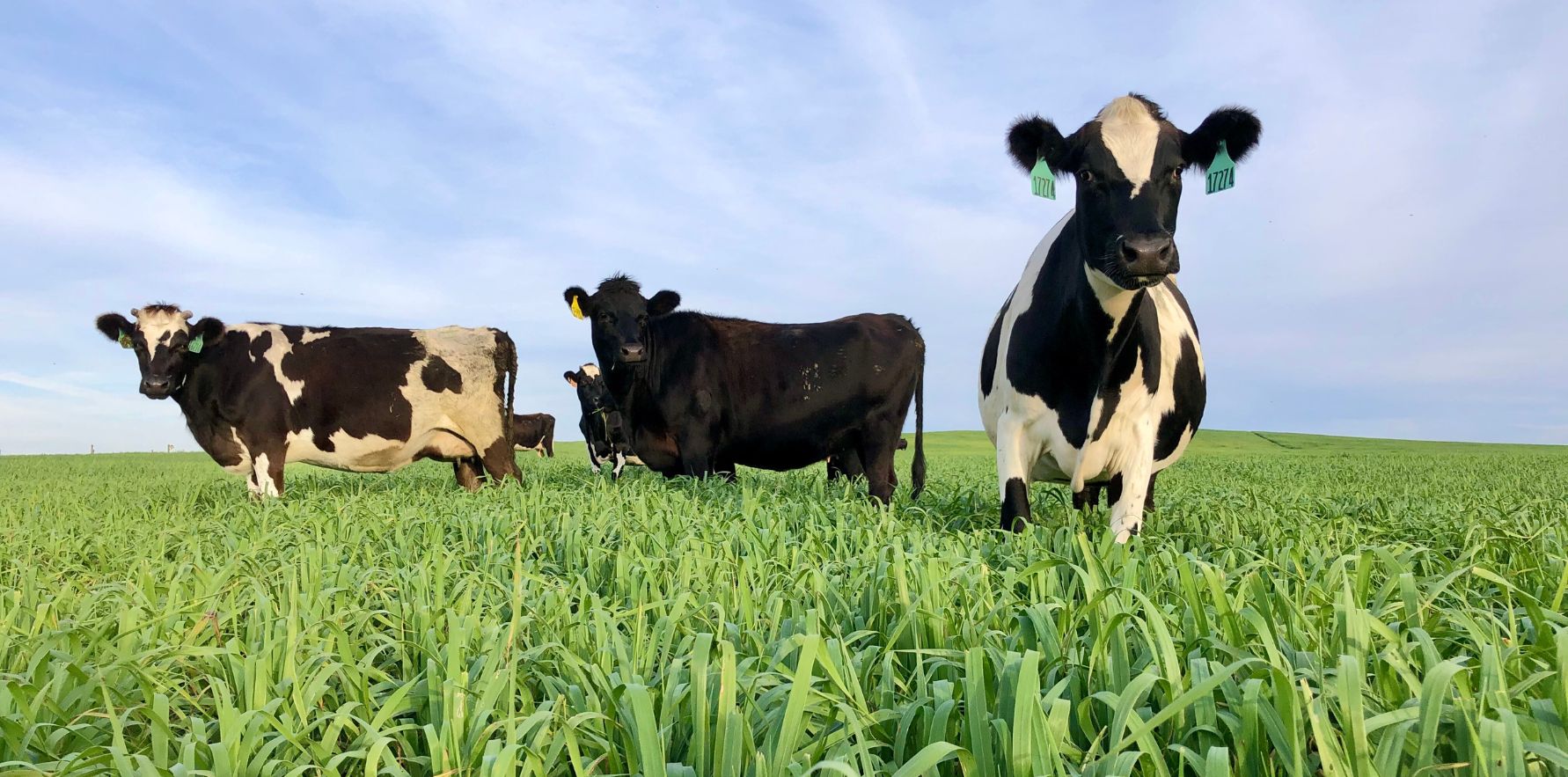
365-day forage rotation.
Bermudagrass covers roughly 30% of our land. We rotate through cool-season wheat, oats, and ryegrass in winter, and pearl millet in summer — no-till drilled to preserve soil structure. Center-pivot irrigation with integrated cow cooling systems keeps everything alive through Georgia heat. This is agronomy, not luck.
Regenerative by design.
Hart Dairy was selected as one of approximately 50 companies worldwide for A Greener World's Certified Regenerative pilot program — measuring soil health, water quality, air quality, biodiversity, and social responsibility across the entire operation. We're committed to leaving this land better than we found it.
Non-GMO from the ground up.
Non-GMO Project Verified means independent scrutiny of everything that goes into our system — including the grass our cows eat. It's one more layer of proof that we mean what we say.
Independently verified
Five certifications. Zero self-reporting.
Certified Humane®
First pasteurized US dairy to earn this designation. HFAC-certified.
Animal Welfare Approved
The only label Consumer Reports rates as "highly meaningful" for animal welfare.
Certified Regenerative
AGW pilot program. ~50 companies worldwide. Whole-farm sustainability.
Non-GMO Project Verified
Independent verification of GMO avoidance across the entire supply chain.

Kosher Dairy
Certified kosher by an accredited rabbinical authority.
The factory
One product. Zero compromise.
We don't process yogurt. We don't make cheese. We don't churn butter. We do one thing — milk — and every decision we make serves that single focus.
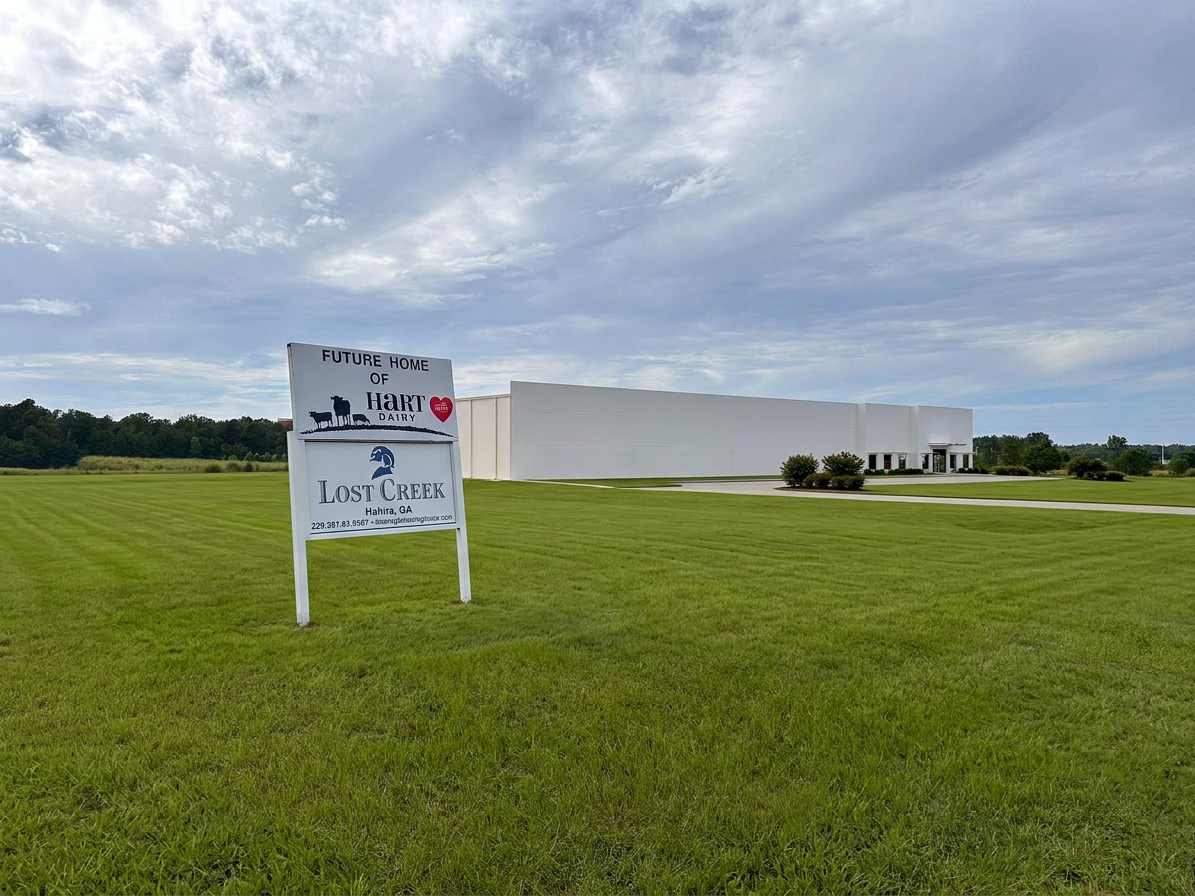
Hart Dairy is building a state-of-the-art processing facility in Waynesboro, Georgia. A single-purpose plant designed for one mission: producing the highest-quality ingredient milk in North America. When it's operational, we control the entire chain — from pasture to package — with no dilution of focus.
Specialization is our advantage. Every dollar, every system, every process is optimized for milk — nothing else. That's how you get consistency at scale. We are building our client roster now. If your brand needs ingredient milk that carries the most rigorous certifications in dairy, this is where it starts.
Waynesboro, GA
Location
~2 years
To completion
100% milk
Single-product focus
Let's work together
Your product starts here.
We supply ingredient milk to brands that refuse to compromise on welfare, nutrition, or sustainability. Tell us about your project.